







Ashley Cope

- Fellowship Type
- Predoctoral Fellow
- Fellowship Name
- Big Ten Academic Alliance/Smithsonian Institution Predoctoral Fellow
- Affiliation
- University of Maryland, College Park
- Years
- 2026–2027
- Beyond Binaries: Experiments in Gender and Form in Interwar US Art
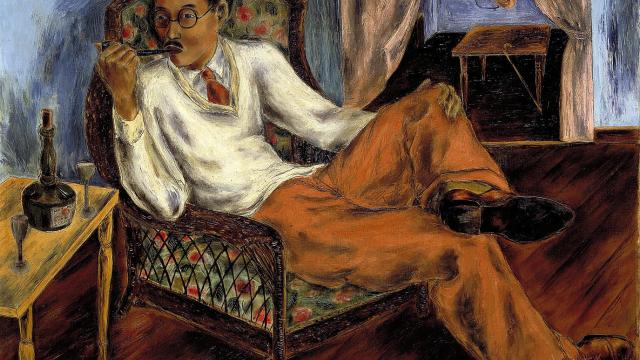
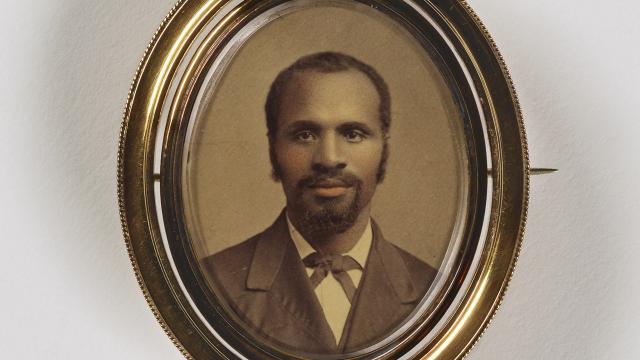
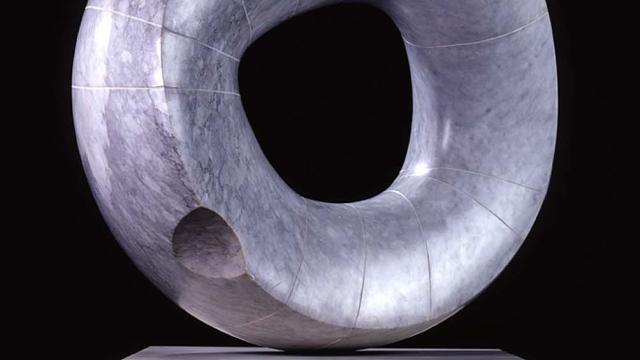
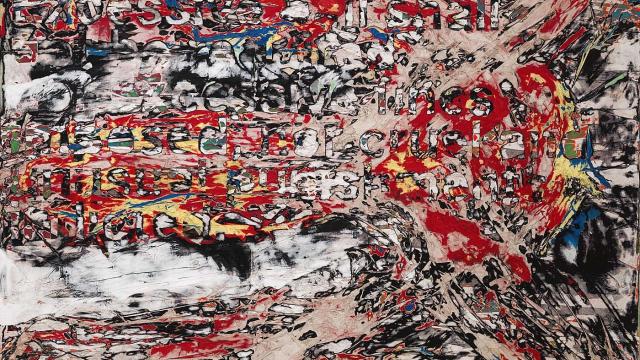
“Beyond Binaries” reveals that during the interwar period, queer and gender-nonconforming artists constructed nonbinary gender possibilities through embodied and visual experiments. Artists Rose O’Neill, Baroness Elsa von Freytag-Loringhoven, Richard Bruce Nugent, and Charles Demuth engaged formal strategies and motifs that blurred corporeal categorization and imagined an expanded field of gender. They did so in the context of the interwar period’s ongoing scientific categorization of bodies, public and private reorganization of acceptable gender roles and expressions, and consolidation of openly queer communities in Europe and the United States.
Early sexology, or the study of human sexual behavior, proposed influential theories of sexual and gender diversity at the turn of the twentieth century; these included concepts like the “third sex,” a capacious umbrella category that challenged a strict and universal sex/gender binary and that included queer sexualities and the New Woman. Relying on deep archival research, this project reveals that sexology and its concepts like the third sex were consumed and critiqued by many queer modernists, though this fact is generally neglected and unexplored in American art history. The four artists at the center of the dissertation were transatlantic figures with ties to avant-garde, frequently queer circles as well as to metropolitan centers for sexology. As artists, they were uniquely positioned to visualize nonbinary embodiments and expressions as distinctly possible, thereby exemplifying sexological discourse in their works. Through formal strategies including coupling, fragmentation, zoomorphism, and juxtaposition, their works reveal historically specific and radically inventive negotiations around the classification of gender and its boundaries.
The dissertation makes important reciprocal contributions to American art history and gender studies by engaging queer theory and trans studies as frameworks. Despite wide and significant interdisciplinary reach elsewhere in the humanities, the discipline of trans studies remains profoundly under-engaged in the history of art, particularly regarding non-Contemporary art. This project makes critical interventions by bringing trans methods to bear on pre–World War II American art, while simultaneously illuminating historical precedents of boundary crossing, thirdness, and binary deconstruction exemplified by artists in the interwar United States.