


Madeleine Harrison

- Fellowship Type
- Postdoctoral Fellow
- Fellowship Name
- Terra Foundation for American Art Postdoctoral Fellow
- Affiliation
- Courtauld Institute of Art
- Years
- 2022–2023
- A Quiet Renaissance: Portraits, Still Lifes, and Landscapes by Interwar Black American Modernists
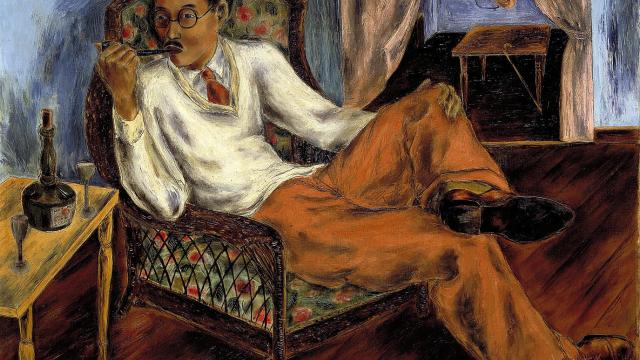
My project examines a body of figurative, naturalistic portrait, still life, and landscape paintings produced in the interwar period by the Black American artists Aaron Douglas, Laura Wheeler Waring, Loïs Mailou Jones, Archibald J. Motley Jr., and Palmer Hayden. In scholarship and in exhibitions in the United States and internationally, art historians have tended to interpret the visual culture of the Harlem Renaissance—the period with which these artists are all primarily associated—as modernist; as a result, these artists’ practices have been defined in the same manner. The works by these artists that have received the most attention are graphic and stylized with contemporary subject matters, elements of abstraction, and non-naturalistic color palettes and compositions. And yet, these artists all produced a substantial number of naturalistic works during the same period. They each maintained a strand of practice that treated more conventional subject matters—individual sitters, landscapes and seascapes, assortments of quotidian or remarkable objects—through more established painterly modes. With conventional compositions; loose brushwork; and lifelike light, shadow, and color, these works evoke Impressionism and Post-Impressionism. As a research fellow at SAAM, I am conducting the archival research and visual analysis necessary to account for these naturalistic paintings that have been almost entirely neglected in scholarship to date. I anticipate that restoring this naturalistic tendency to a position of prominence will reveal that these artists’ interwar practices existed in a vastly more heterogeneous, unstraightforward relation to modernism than has henceforth been posited. My research outputs will provide a reading of works that have the potential to significantly alter how scholars consider the Harlem Renaissance, a period that remains a critical locus for mapping genealogies of Black American artmaking.