

Tom Nakashima

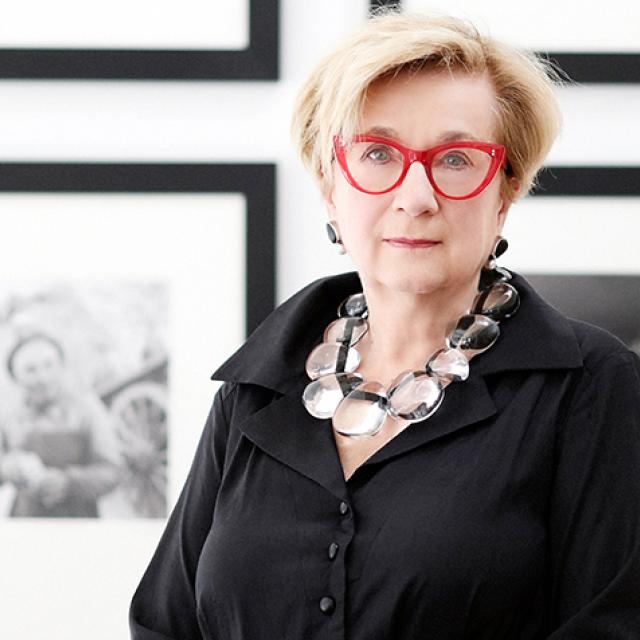
Courtesy of Tom Nakashima. Photo by Lindsey Nakashima.
- Also known as
- Thomas V. Nakashima
- Tom V. Nakashima
- Born
- Seattle, Washington, United States
- Active in
- Washington, District of Columbia, United States
- Biography
“I try to do things that can be read in many different ways. An allegory does that – it gets deeper and more interesting as you try to unravel and comprehend it. But in the end, such a mystery, if it is really good, has to contain truth...”
––Tom Nakashima, 1991
Tom Nakashima is an artist and educator whose paintings, prints, collages, and sculptures address concerns of war and ecological destruction. Juxtaposing motifs from European, American, and Japanese art, Nakashima developed a body of heavily allegorical works that reflect the complexities of his religious upbringing, biracial identity, and concerns for nuclear proliferation.
Nakashima was born in Seattle’s Japantown in 1941, shortly before his father, a secondgeneration Japanese American, was drafted as a surgeon for the US Army Medical Corps. When Executive Order 9066 was issued the following year, his family was stationed at Camp Chaffee, Arkansas, and exempted from forced removal, unlike many of their relatives who were incarcerated at Minidoka and Tule Lake War Relocation Centers in Jerome, Idaho, and Modoc County, California, respectively. Nakashima eventually grew up in Dubuque, Iowa, raised as a Roman Catholic by his mother of German, Irish, and Jewish ancestry.
Nakashima’s aspirations of becoming an artist took shape during summer visits to New Hope, Pennsylvania, where his uncle, the architect, woodworker, and designer George Nakashima, settled after the war. There, Nakashima became familiar with the art of his uncle’s contemporaries, such as Harry Bertoia, Morris Graves, Isamu Noguchi, and Ben Shahn. After serving in the 101st Airborne Division of the US Army (1960-63), Nakashima pursued his academic training at Loras College in Dubuque, Iowa (1963-67), and the University of Notre Dame in Indiana (1967-69). Early in his career, Nakashima made large-scale abstract paintings, counting Barnett Newman as his most significant influence.
By the early 1980s, Nakashima became increasingly engaged with his Japanese heritage and experimented with a more representational style. Beginning with the series Standing on Ground Zero (1982–85), he developed a visual vocabulary referred to Giotto’s architectural structures, Matisse’s nude figures, and Jasper Johns’s targets, alongside images of cages, suspended fish, Buddhist and Hindu iconography. His compositions often incorporated or were painted onto three-dimensional structures, such as wooden boxes and Japanese folding screens. His nuanced reflection on the contradictory nature of sanctuaries, as both protective and confining, emerged as a prominent theme in his practice.
Since 1999, Nakashima pivoted to portraying piles of destroyed orchard trees, abandoned farm structures, and their debris as remnants of housing development projects that he encountered and photographed in Virginia. For the Treepile series, Nakashima further emphasizes his use of the grid system that allows him to work on expansive surfaces of collaged paper, canvas, or wood panels through small square portions. The resulting complex but forlorn imagery of entangled branches alludes to our artificial order imposed onto nature, as seen in bonsai and vanitas paintings, which expands his consideration for sanctuaries in environmental and ecological terms.
Based in the Mid-Atlantic region since the 1970s, Nakashima has exhibited both locally and internationally. His works became widely known especially after his participation in the pivotal exhibition The Decade Show: Frameworks of Identity in the 1980s, organized between three institutions in New York City, the Museum of Contemporary Hispanic Art, the New Museum of Contemporary Art, and the Studio Museum in Harlem, in 1990. In addition to his prolific artistic practice, Nakashima held an extensive teaching career at the Columbus College of Art & Design, Columbus, Ohio (1969-73), West Virginia University, Morgantown, West Virginia (1973-81), the Catholic University of America, Washington, DC (1981–2002) and Augusta University, Augusta, Georgia (2002–10).
Authored by Anna Lee, SAAM Curatorial Assistant for Asian American Art, 2025.