
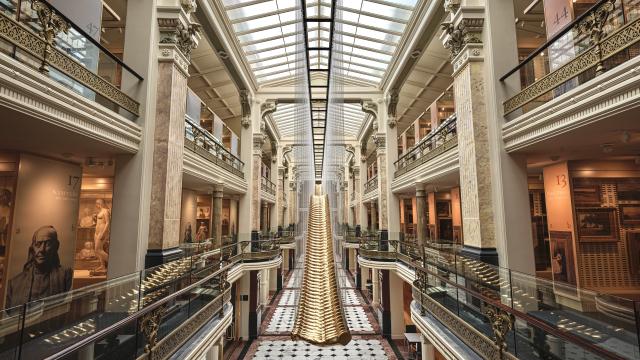
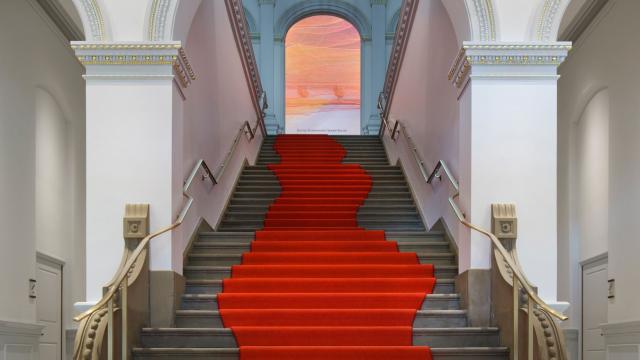
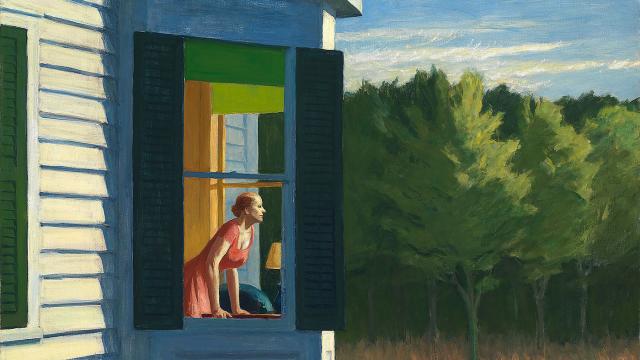
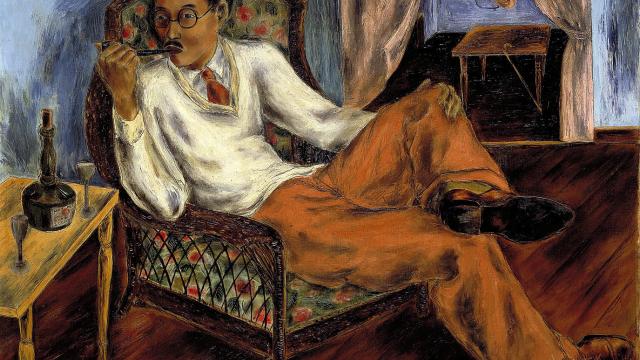



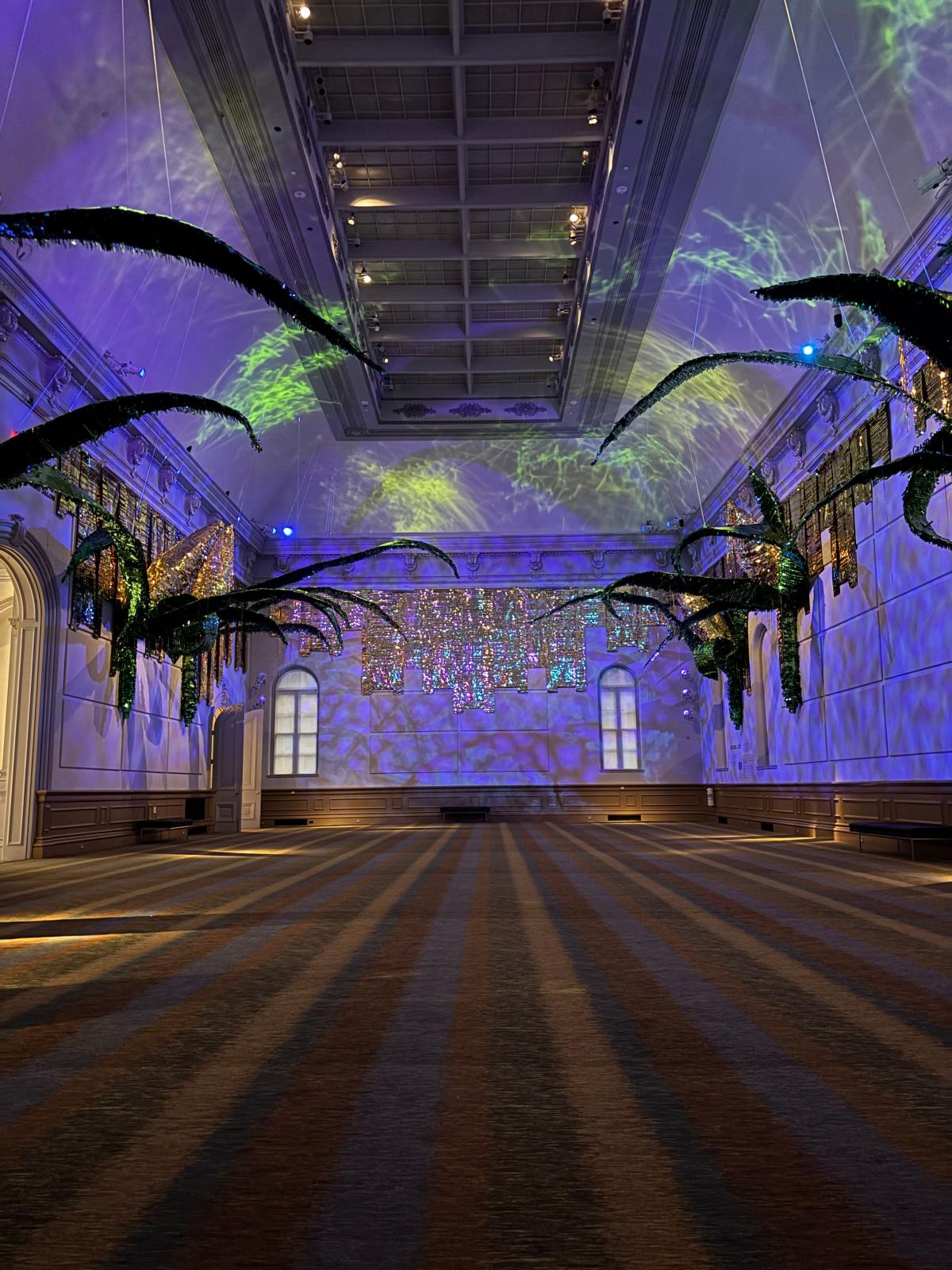
Installation photography of Justin Favela: Capilla de Maíz (Maize Chapel), Renwick Gallery of the Smithsonian American Art Museum, 2025; Photo by Amy Hutchins
“Corn is in virtually everything we eat,” artist Justin Favela stated in a recent conversation at the Smithsonian American Art Museum, “Used from food to fuel to create industry.”
Favela was at the museum to talk about his site-specific installation, Capilla de Maíz (Maize Chapel), a new work that transforms the entire Rubenstein Grand Salon at SAAM’s Renwick Gallery into a fantastical world, with shimmering gold-fringed walls and piñata corncobs that highlight the role of maize in North American visual culture.
Favela is a multidisciplinary artist of Guatemalan and Mexican heritage based in Las Vegas, Nevada. He incorporates traditional Mexican and Latin American craft—specifically or piñata making—into large-scale sculptures and installations that meld art history with pop culture. Favela began his piñata making practice as a fine arts student at the University of Nevada, Las Vegas. When a professor asked him to make art that represented his identity, he chose the piñata, a party staple that has transcended its Mexican origins and been absorbed into American culture—a symbol of both celebration and destruction.
Building the Americas
In Capilla de Maíz, Favela brings together many sources and symbols of maize (corn), frequently called “yellow gold” in the Americas. The room glimmers in gold, tying in the color of the corn itself and its role as a “cash crop.” Maize sustained Indigenous peoples and later European settlers, helping to grow the American agricultural economy.
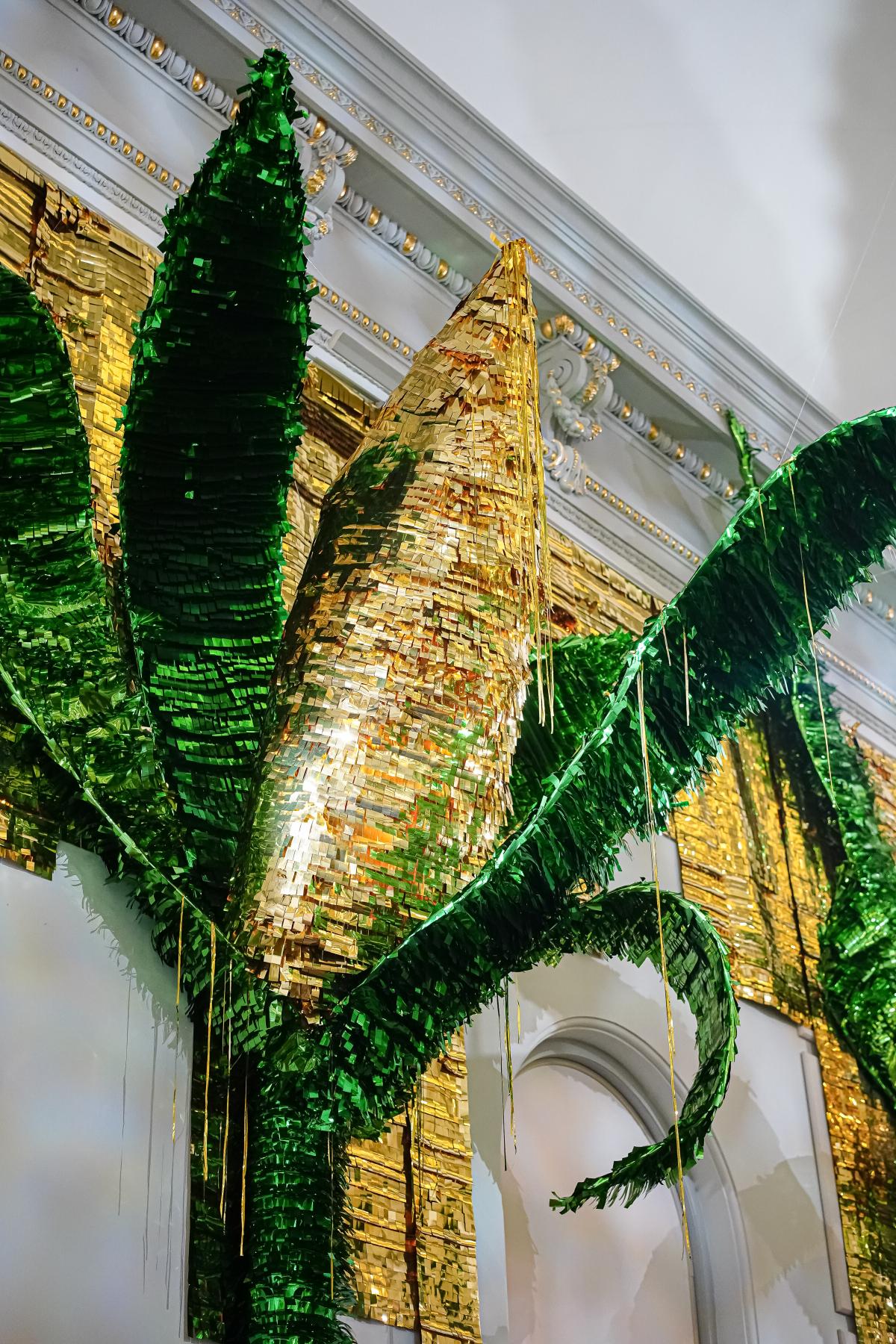
Installation photography of Justin Favela: Capilla de Maíz (Maize Chapel), Renwick Gallery of the Smithsonian American Art Museum, 2025; Photo by Albert Ting
While on a site visit to Washington DC during the planning for the installation, Favela noted that corn was so deeply embedded into the creation of the United States that corncobs were sculpted into the column capitals at the U.S. Capitol and repeated on the columns of the Renwick Gallery building, a visual reference he wanted to echo in his installation.
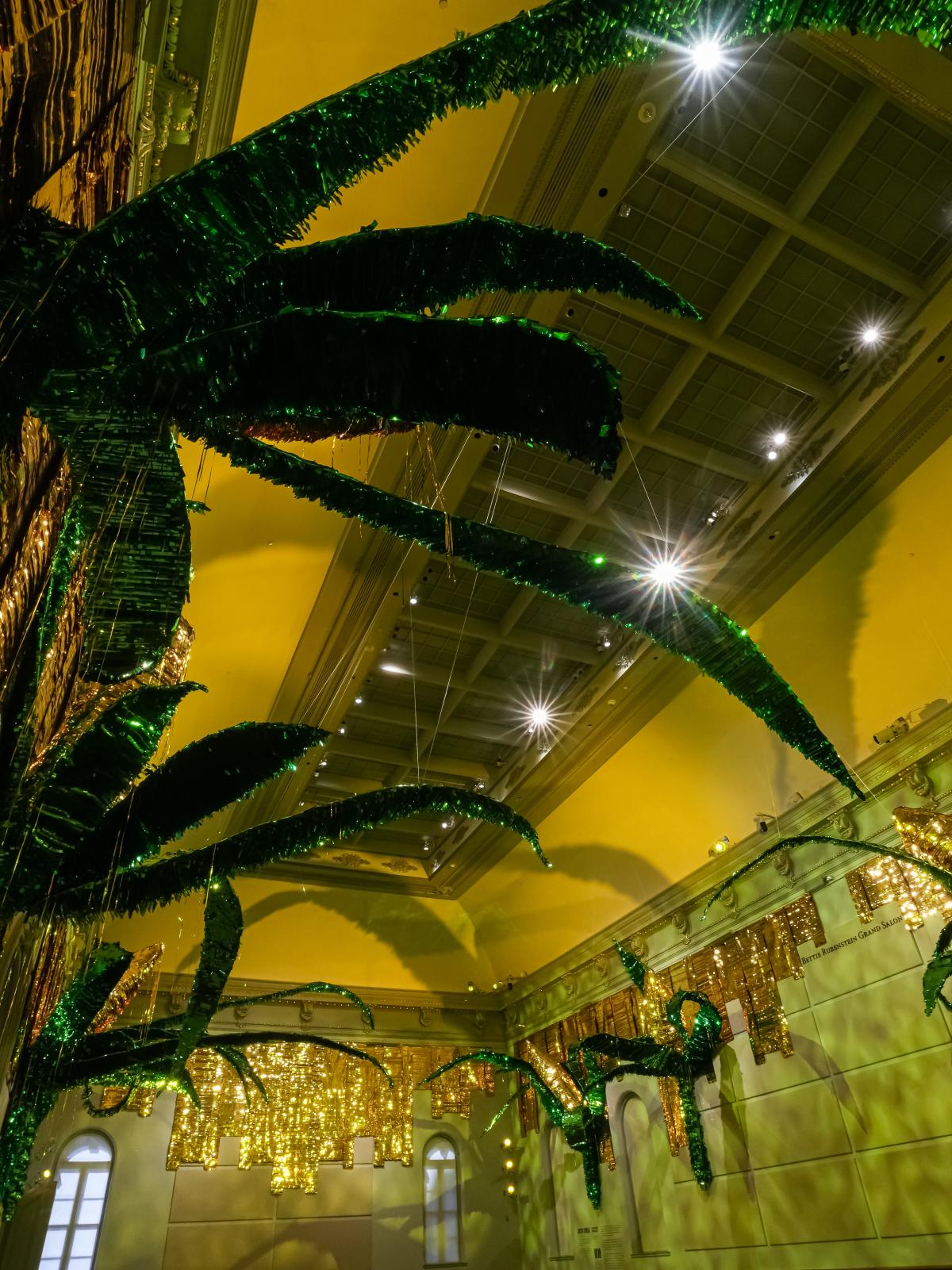
Installation photography of Justin Favela: Capilla de Maíz (Maize Chapel), Renwick Gallery of the Smithsonian American Art Museum, 2025; Photo by Albert Ting
Creating a Chapel
Favela draws upon personal memories to elevate the humble crop and transform the Renwick’s Grand Salon into a “corn chapel.” In addition to piñata making, the installation references another Mexican art practice, the lavish Churrigueresque ornamentation of eighteenth-century Mexican Catholic churches he encountered while in residency in the Mexican state of Puebla. Favela was initially attracted to the golden surfaces and textures that were reminiscent of the glitzy style celebrated in his hometown of Las Vegas. While in the cathedral, Favela reflected on how a physical space can be spiritually moving.
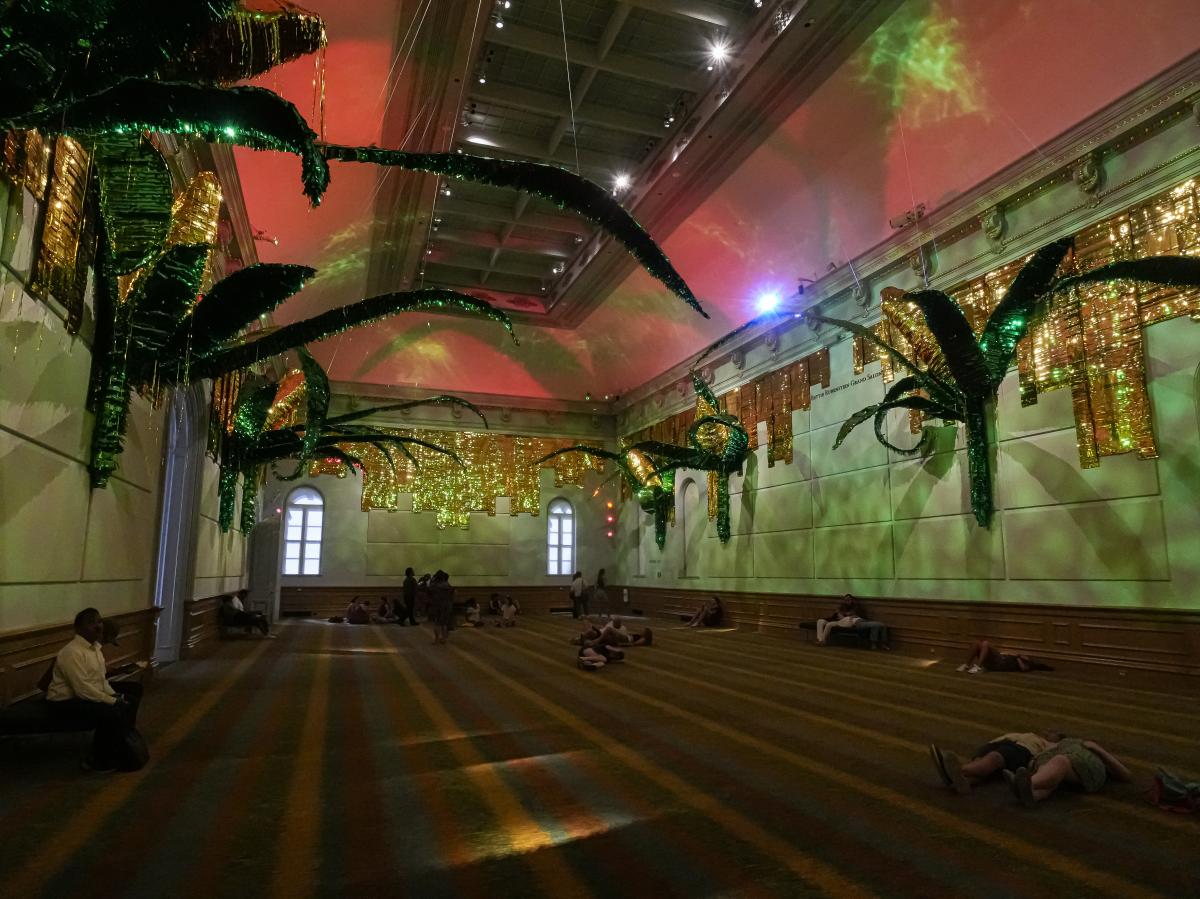
Installation photography of Justin Favela: Capilla de Maíz (Maize Chapel), Renwick Gallery of the Smithsonian American Art Museum, 2025; Photo by Albert Ting
With the same reverence he describes experiencing the grandeur of a Mexican church, Favela talks about the memories of walking through his family’s cornfields and how the corn overhead felt like a chapel. He wanted to capture that feeling at the Renwick, but “make it elegant.” Thirty-foot Mylar corn stalks that stretch overhead with carpet in rows of golds and green beneath the feet—accompanied by a colorful 6.5-minute light projection that mimics the passage of the sun and weather over the course of a day—invite visitors to immerse themselves in the space and experience the transformative nature of corn.
The museum commissioned this site-specific installation for the Renwick Gallery’s Rubenstein Grand Salon to complement the exhibition State Fairs: Growing American Craft. Favela’s piñata corncobs highlight both the importance of maize in the formation of an American identity and the confluence of agriculture and craft traditions on display at state fairs.