




Venancio Igarta
- Biography
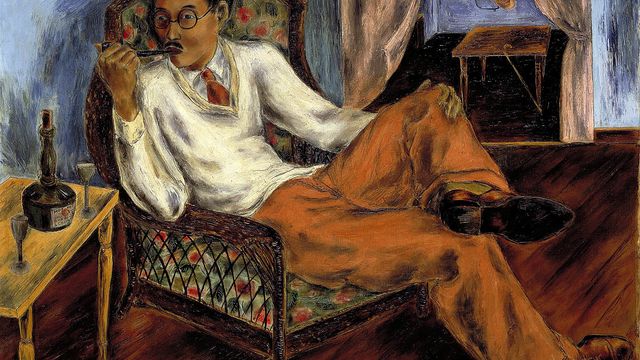
Venancio C. Igarta emigrated from the Philippines to the U.S. in 1930, initially taking manual labor jobs along California’s Pacific Coast. Unable to find employment as the Depression worsened, he relocated to New York City in the mid-1930s. There, while he was working at a psychiatric clinic, a nurse noticed his hand-painted meal tray and encouraged him to explore art. Igarta received his first art instruction at the National Academy of Design and, more significantly, the Art Students League in the late 1930s, developing a keen interest in color. By the 1940s, Igarta began participating in notable exhibitions; his work Northern Philippines (1940) was selected for the exhibition Artists for Victory, an Exhibition of Contemporary American Art: Paintings, Sculpture, Prints (1942-43) at the Metropolitan Museum of Art in New York. Igarta also participated in the Container Corporation of America’s nationally traveling show Modern Art in Advertising (1945). While his creative output dwindled in the 1960s, Igarta revitalized his artistic practice in 1982. His later works, which included depictions of his experiences as a laborer of the Manong generation, focused heavily on experimenting with color theory and geometric abstraction, following his twenty-five-year tenure as the chief colorist at the Color Aid Paper company. During the final decade of his life, Igarta’s works were warmly received in his native country, culminating in a retrospective exhibition held at the Metropolitan Museum of Manila, Philippines (1992).
Authored by Anna Lee, curatorial assistant for Asian American art, 2025.