




SAAM Stories

02/14/2007
The Luce Center staff made a Valentine's Day word scramble game for visitors.
Michael
Technology
02/09/2007
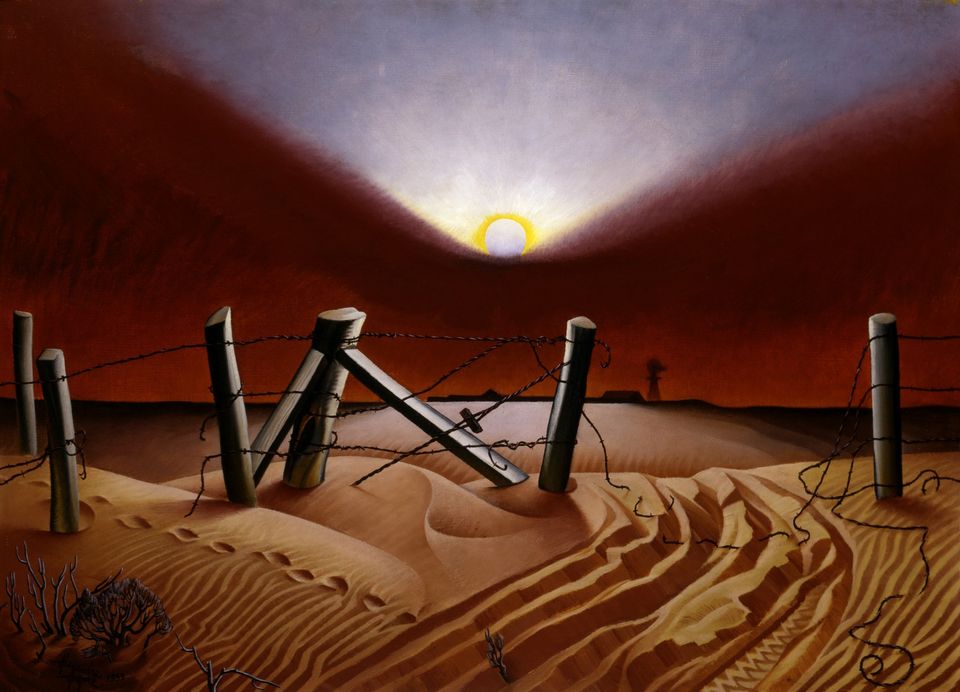
Ninety years from now, when America begins to reflect on the past one hundred years, what will our descendants think of the early part of the 21st century? And how will artists define the era?
SAAM Staff
Blog Editor

Technology
02/05/2007
We asked SAAM's lighting designer, Scott Rosenfeld, to discuss his thinking as he lit the exhibition on Joseph Cornell currently on view in the third-floor galleries.
SAAM Staff
Blog Editor

01/30/2007
Back before the holidays we got a question about how jewelry was displayed in the Luce Center.
Michael

01/12/2007
Joseph Cornell paved the way for artists like David Beck. Beck was commissioned to create MVSEVM to commemorate the reopening of the Smithsonian American Art Museum in July of this year.
Kriston

01/09/2007
The Happenstance Theater returned Prufbox to the stage after a well received run in the first annual Capital Fringe Festival. The encore performance was staged before the holidays at SAAM, a proper setting, since the play's mise en scène is built to resemble the work of Joseph Cornell.
Kriston

12/26/2006
Twenty-six major paintings from America's Gilded Age make up the collection assembled by San Antonio's Hugh and Marie Halff, all of which are now on display at American Art.
Kriston

12/21/2006
Following the landmark National Gallery of Art Dada exhibition, the Phillips Collection contributes to the District's year of Dada with the exhibition, Société Anonyme: Modernism for America.
Kriston

12/19/2006
The Smithsonian American Art Museum recently launched ¡del Corazón!, an online catalogue of Latino art from the United States.
Kriston
Image Not Available
12/12/2006
For the show that he curated here in D.C., New York–based artist José Ruiz writes that he was prompted by a bit of wordplay:
Kriston

12/01/2006
I was watching a backlog of Desperate Housewives episodes on TiVo the other evening and suddenly I noticed something familiar. When Bree is confronting her new husband Orson, there in the background hangs The Girl I Left Behind Me by Eastman Johnson. The original painting hangs in SAAM's second floor galleries.
SAAM Staff
Blog Editor

11/20/2006
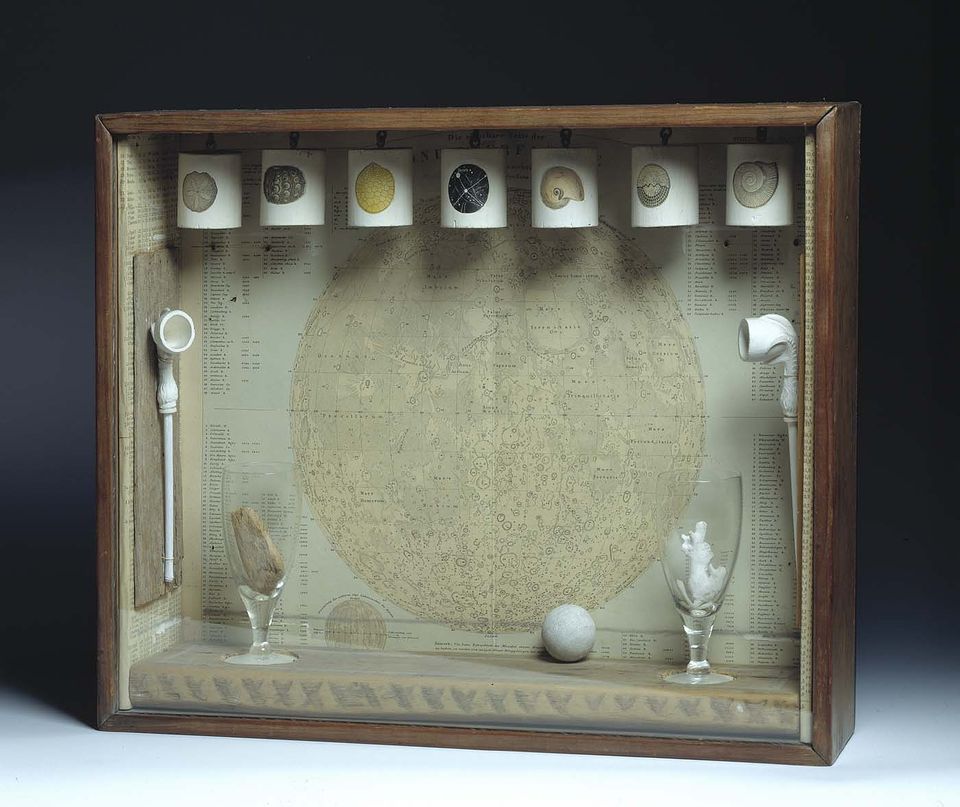
Excess is not usually associated with an artist whose lifestyle has been characterized as ascetic and whose art is contained on an intimate scale. Yet Cornell indeed engaged in marvelous excess. Just imagine the contents of his tiny house at the time of his death: easily three thousand books and magazines, a comparable number of record albums and vintage films, enough diaries and letters to now fill more than thirty reels of microfilm, and tens of thousands of examples of ephemera
Kriston

11/17/2006
Lynda gives a talk about the exhibition at 3pm on Saturday, November 18, 2006. (Make sure you check the link for any last-minute updates.) The docents give highlights tours at noon and 2pm daily.
Michael
Image Not Available
11/14/2006
What if Jackson Pollock hadn't been born in Cody, Wyoming, but rather Moulins sur Allier in France? Would critics and enthusiasts have written paeans to the artist's early years in the Auvergne?
Kriston

11/03/2006
In 1970 John Baldessari was using an abandoned theater for a studio, and he'd filled it completely with paintings from the early 1950s through the late 1960s. At some point he surveyed the studio as some people might look at a crowded closet and decided the paintings were "a problem to solve."
Kriston

10/27/2006
Via Tyler Green, earlier this year David Byrne—the extraordinary pop musician, best known for helming the Talking Heads—blogged about his trip to Marfa, Texas
Kriston

10/25/2006
Enjoy a bird’s-eye view of the undulating glass canopy designed by renowned architect Norman Foster of Foster and Partners.
Joanna