






Margot Yale

- Fellowship Type
- Predoctoral Fellow
- Fellowship Name
- Wyeth Foundation Predoctoral Fellow
- Affiliation
- University of Southern California
- Years
- 2024–2025
- From Red Feminism to the Blacklist: Labor Schools and the Work of Art, 1935–1957
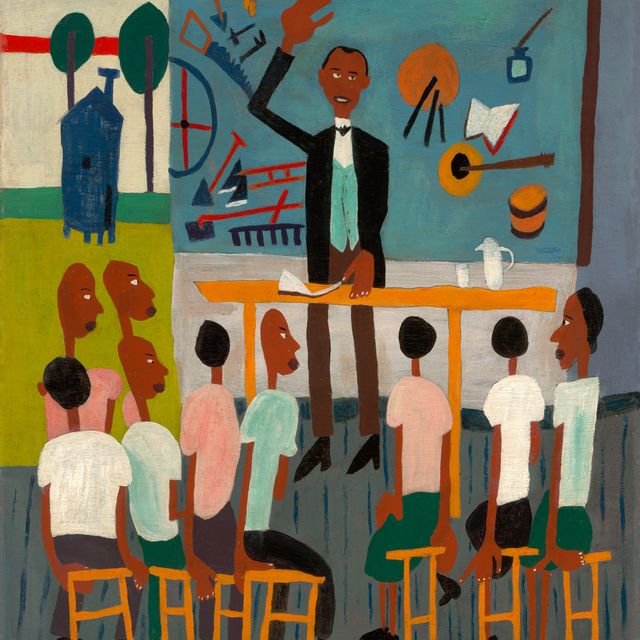
My dissertation examines how women artists surveilled and blacklisted by state and federal government under McCarthyism—Margaret De Patta, Elizabeth Catlett, Alice Neel, and Emmy Lou Packard—“dangerously” engaged working-class audiences through pedagogy and the structural logic of the multiple. I situate these artists in the labor school communities where they taught or learned—the Jefferson School of Social Science (1943–56), its Harlem branch (the George Washington Carver School), and the California Labor School in San Francisco (1942–57). For a cross-continental network of women artists and students, these spaces of production facilitated aspirations of cultural accessibility. Revealing how this network collectively imagined their work advancing multiracial working-class solidarity in struggles against gender oppression, racial capitalism, and imperialism in the United States before the feminist art movement, my project tells an earlier story of women artists picturing alternative futures foreclosed by the unraveling of the Popular Front that remains absent from the history of American art. Though their vision for a collaborative American art was quelled by McCarthyism and the fallacy of Stalinism, I posit that understanding its long declension is as valuable as interpreting the “triumph” of postwar American painting.
Locating each woman artist in her milieu of cultural producers, I focus on how she used the multiple—newspaper and magazine illustrations, “fine art” prints, photographs, cast jewelry, and sewing patterns—as a tool for political engagement to address broader audiences. Drawing on art history, visual studies, feminist studies, cultural and labor history, and critical race studies, my dissertation goes beyond reinscribing these artists through the monographic model to illuminate the educational, political, and artistic networks among them that were critical to their collective project. Examining how such networks centered ideas of intersectionality, my dissertation demonstrates that critical discourse on American art in 1940s and 1950s was more discordant, and grassroots, than art historians acknowledge.