

Shahzia Sikander

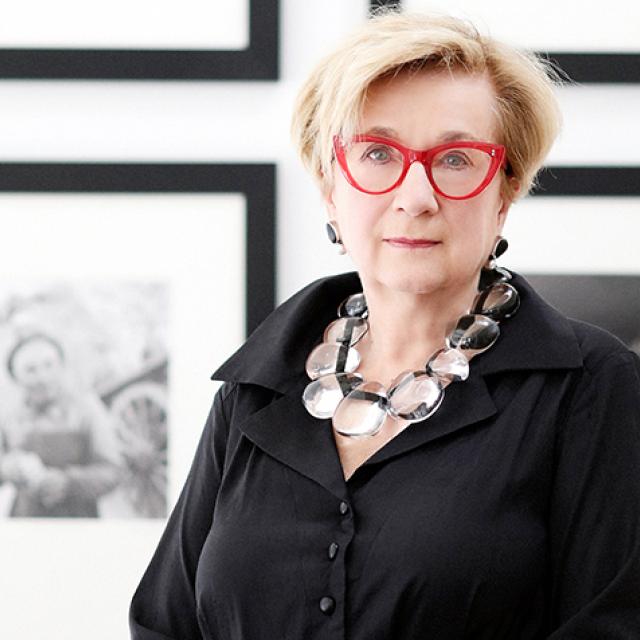
Photo by Agostino Osio
- Born
- Lahore, Pakistan
- Biography
“Drawing is the connecting tissue in my practice, a thinking tool that I use to align my art with poetry. My work draws on poetry’s ability to move in and out of glib categories and national lineages, to observe the inside and outside of the shifting divides from multiple, fraught sides, allowing for dissonance and tension.”
Shahzia Sikander is a leading artist of her generation. As part of a cohort of internationally aligned emerging artists in the 1990s, she crucially reshaped American art as it took a global turn heading into the twenty-first century. Sikander initially trained in an illustration tradition—classical Indo-Persian miniature painting—that was bounded by frames, borders, and precise architecture. From this, she developed her unique style, which fills these spaces with fluidity, fragmentation, and surreal permutations resonant with a postmodern world and a contemporary feminist perspective. Stretching over many decades, Sikander’s iconoclastic multimedia exploration now expands from drawing and painting to encompass mosaics, sculpture, and video.
Sikander studied, and began subverting, the techniques and compositions of central and South Asian painted manuscripts as she pursued her BFA at the National College of Arts in Lahore, Pakistan. Her thesis, The Scroll (1989–90), used this centuries-old visual language to show the artist’s daily life and kicked off a “neo-miniature” movement of contemporary artists reinterpreting this cultural legacy. Sikander arrived in the United States for her MFA at Rhode Island School of Design, graduated in 1995, and within a few years her work began appearing in major institutional group and solo exhibitions. Variously weaving South Asian and Islamic visuals with portraits of fellow creatives, hip-hop icons, global politicians, poetic texts, and abstracted figures and repeating forms, her compositions expanded from intimate manuscript pages into gallery-filling wall murals and hanging paper installations.
In the early 2000s, Sikander began experimenting with video, initially capturing her miniature process in stop motion, and growing these works in scale and complexity with digital animation and high-definition video capture. Adding duration, dynamic movement, and sonic dimensions to her precisely painted scenes, works like The Last Post (2010) become extended meditations on themes found elsewhere in her practice. Taking up one of Sikander’s most consistent concerns, The Last Post explores how entangled, long-obscured histories of globalization are key to understanding shared pasts, as well as present forces and possible futures. In 2020, the artist began creating bronze sculptures, with female figural explorations from decades of drawings emerging as three-dimensional presences first in the gallery and, in 2023 and 2024, as monumental public statuary in New York City and Houston, Texas.
Over the course of her career, Sikander’s work has continually been featured in exhibitions and biennials, collected by public institutions around the world, and recognized with significant awards, including a MacArthur Fellowship, the Pollock Prize for Creativity, and the State Department Medal of Arts.