


ShiPu Wang
- Fellowship Type
- Senior Fellow
- Fellowship Name
- Terra Foundation for American Art Senior Fellow
- Affiliation
- University of California, Merced
- Years
- 2014–2015
- The Other American Modernisms
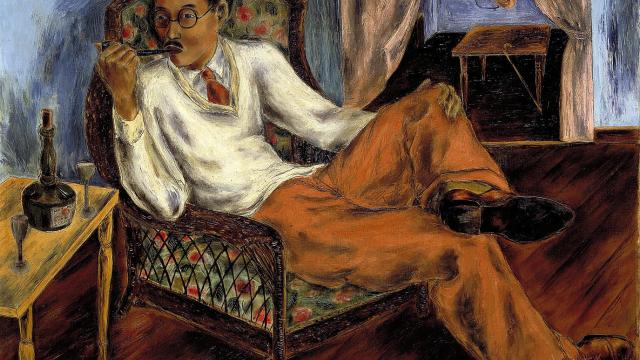
My book project, The Other American Moderns, investigates the visual production of early twentieth-century American artists of Asian descent who were significant members in art circles on both coasts of the United States, but who have received little scholarly attention. Focusing on six artists’ pre-WWII works, most of which feature other racial minorities, my research foregrounds these artists’ critical engagement with and re-imagining of “Americanness” and its inherent ideological complexities. More than a rediscovery of forgotten minority artists in American art, my project studies Asian American artists’ imagery of the Other by the Other as their productive means of interrogating conditions of diaspora and contested notions of Americanism vis-à-vis artistic alliances, race and class relations, socioeconomic strife, and ideals of American modernism. As such, my book project intervenes in the received American art history that has largely privileged Caucasian (and abstract) artists, and asks how American modernism may be re-conceptualized by bringing into sharper relief Asian American modernists’ active participation in and valuable contribution to an American culture that was indeed multicultural and cosmopolitan.
In The Other American Moderns, I take an object-based approach. I begin each of the delimited but comparative case studies with one pivotal image in an artist’s oeuvre in order to uncover its historical context and underlying commentary on what “America,” and living in America as a minority, meant to a diasporic artist. The book project includes an unprecedented examination of the photographic performance of a diasporic body in the 1913 studio portraits by Frank S. Matsura (1873–1913), reportedly the only Japanese photographer in Okanogan, Washington, at the time, who consistently incorporated himself into both formal and playful pictures of his Native American and Caucasian clients. Two studies focus on diasporic Japanese painters in New York, Eitarō Ishigaki (1893–1958) and Hideo Benjamin Noda (1908–1939), who, through deploying heroic African American figures in their topical imagery in the 1930s, participated and intervened in contemporary debates on social justice and racial equality in a tumultuous period of U.S. history. Another chapter examines a pair of paintings produced in 1926—a portrait of an African American man by Miki Hayakawa (1899–1953) and an abstract portrait of Hayakawa painting the same model by Yun Gee (1906–1963)—that point to the multiracial milieu and alliances that the artists forged in San Francisco against the backdrop of a newly enacted exclusionary law in 1924. The last chapter presents a study of Chiura Obata’s (1885–1975) paintings of people and places, which reveal the intense and continuous cross-cultural negotiations that he engaged in, in both his art and life, in early twentieth-century California. With my decade-long excavation of previously unexamined collections in the U.S. and Japan, my project will result in a book that serves as a contributive publication for readers and scholars who are interested in gaining new insights and conducting further research on the stylistic, ideological, and ethnic diversity among American modernists.