
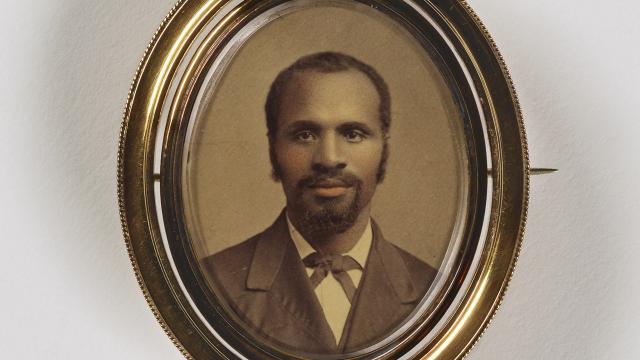

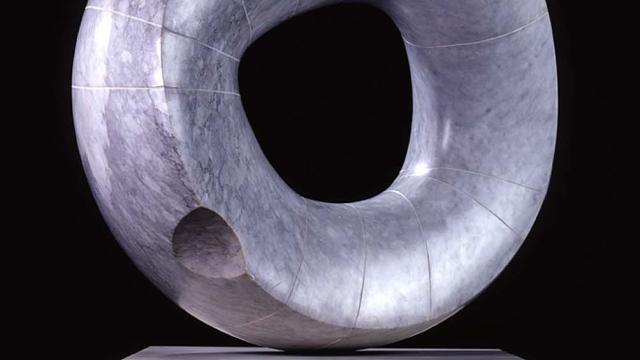
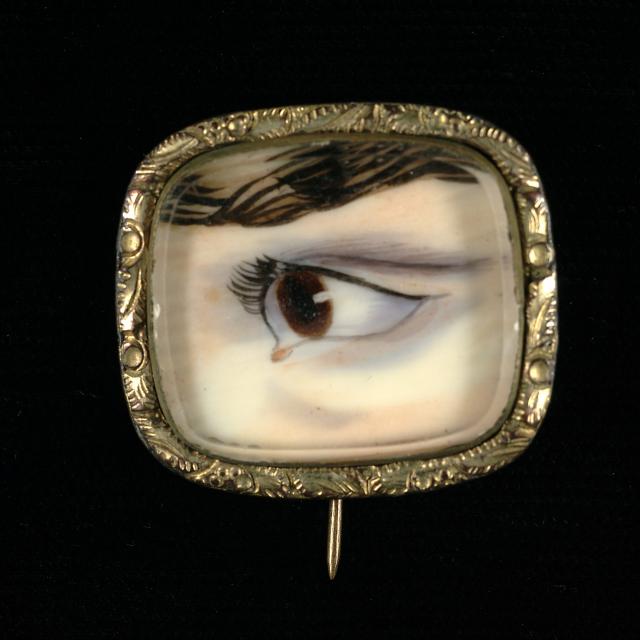


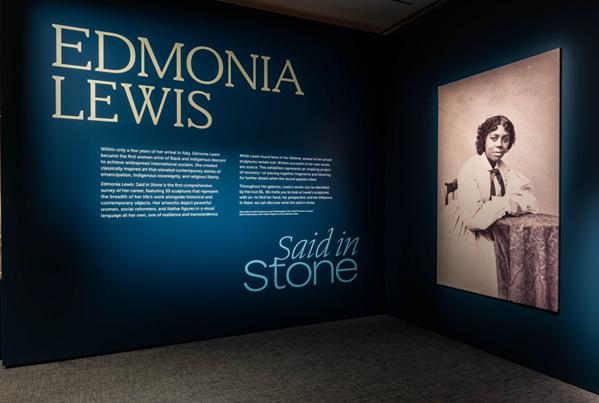
Exhibition images of Edmonia Lewis: Said in Stone courtesy of the Peabody Essex Museum.
In December 1865, Edmonia Lewis (1844-1907) had just arrived in Rome from Boston. Thanks to the help of a few fellow female artists, she quickly settled into a studio building once used by the renowned Italian sculptor Antonio Canova near the city’s Spanish Steps, a neighborhood popular among American artists working abroad. Within only a few years, Lewis became the first woman artist of Black and Indigenous descent to achieve widespread international acclaim.
On view at the Peabody Essex Museum through June 7, the exhibition Edmonia Lewis: Said in Stone celebrates the artist’s creative vision and enduring legacy. Lewis created classically inspired art that elevated contemporary stories of emancipation, Indigenous sovereignty, and religious liberty. The exhibition includes key objects from SAAM's collection.
In the course of PEM's research on Lewis and planning for the exhibition, PEM's exhibition team collaborated with independent objects conservator Amy Jones Abbe, conservators at SAAM’s Lunder Conservation Center, and curators at SAAM, to better understand Lewis’s working process as an artist. Unfortunately, surviving evidence about Lewis’s studio practice is relatively scant. By the early 1890s, she had stopped making sculptures. Lewis then departed Rome for Paris and later London, leaving behind no records about her studio enterprise.
By relying on the material evidence of Lewis’s sculptures themselves, and by using digital tools like the Smithsonian’s 3D scans of all eight sculptures by the artist in SAAM’s collection, Said in Stone has brought to life important and little-understood aspects of her working methods.
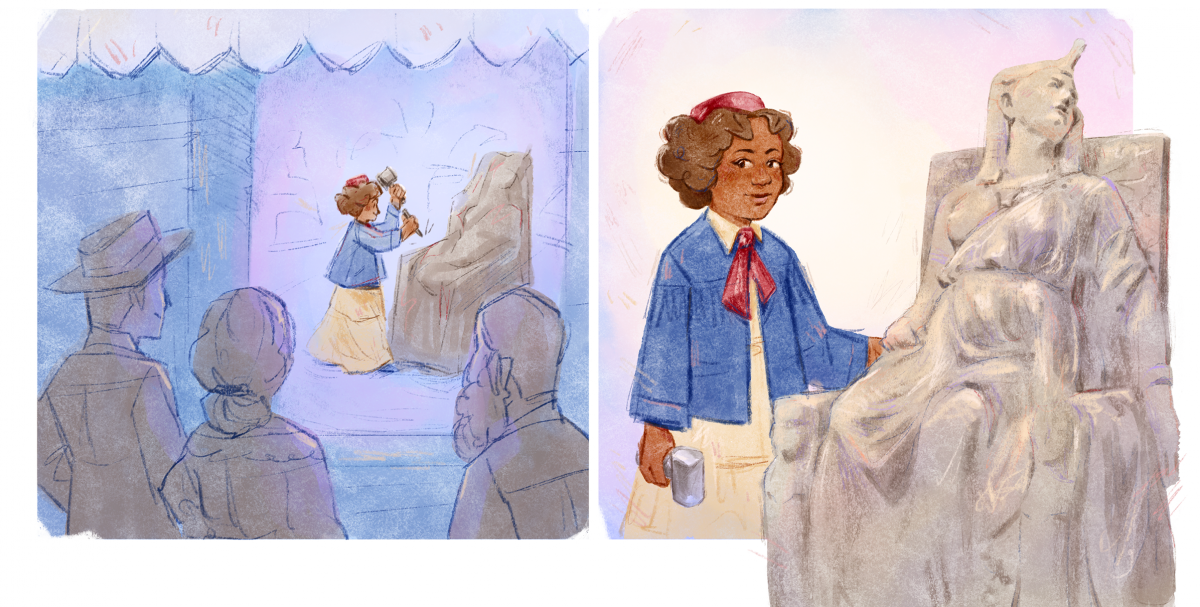
The project team also recognized that, just as in Lewis’s day, our audiences would likely have little understanding of how marble sculptures are actually made. Artists and scholars have long imagined Lewis alone in her studio, wielding a hammer and chisel, freely bringing her compositions out of a rough block of stone. We might look, for example, to the studio scene from SAAM's graphic story about Lewis, "Breaking the Marble Ceiling," from the series, Drawn to Art.
Of course, even during her lifetime, Lewis was happy for critics to misunderstand her process and portray her as a solitary genius, laboring alone, with undaunted vision and diligence, to bring her sculptures to life. We know from the accounts of friends, patrons, and journalists who visited Lewis in Rome, however, that she led a dynamic studio practice and oversaw a complex workshop system. By the early to mid-1870s, at the height of her success, she employed numerous assistants as she made copies of her works, fulfilled portrait commissions, and brought to fruition ambitious works like The Death of Cleopatra, from SAAM's collection.
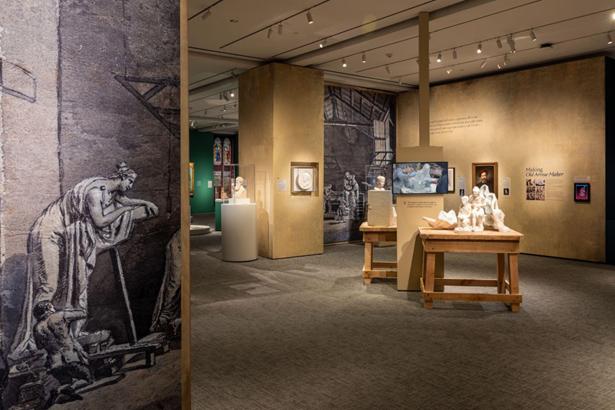
In Said in Stone, then, we wanted to explore the studio as a vital space of artistic production. We did so by tracing the three main steps that Lewis (like her fellow neoclassical sculptors) would have followed to create her art. The galleries bring to life these steps through a combination of physical objects and digital media.
A 3D scan of Old Arrow Maker from SAAM's collection was especially pivotal to this project. Through a collaboration with Skylight Studios, PEM used this 3D scan to reverse engineer Lewis’s broader process.
We selected Old Arrow Maker because, in the course of Amy Abbe’s technical study, published in the exhibition’s catalogue, she concluded from surviving traces of Lewis’s carving process that the artist used a single clay model to create all six surviving versions of the sculpture. By contrast, in Hiawatha’s Marriage—Lewis’s other sculpture inspired by Henry Wadsworth Longfellow’s poem, “The Song of Hiawatha” (1855)—the artist progressively altered the proportions and composition across the eight surviving versions of the work, likely using three different clay models over the course of a decade.
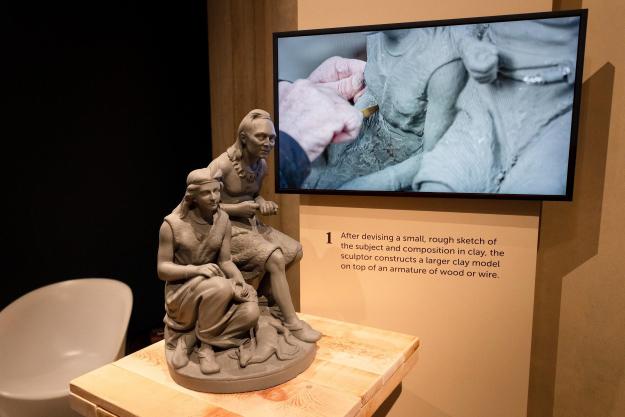
As in Lewis’s process, the gallery begins with clay. After devising a small, rough sketch of her composition in clay, Lewis would have constructed a full-size clay model of the work on top of an armature of wood or wire. To produce this clay maquette, Boston’s 3D Printsmith printed the Smithsonian’s 3D scan at actual scale. The artists at Skylight Studios then used the print to recreate a rough version in clay.
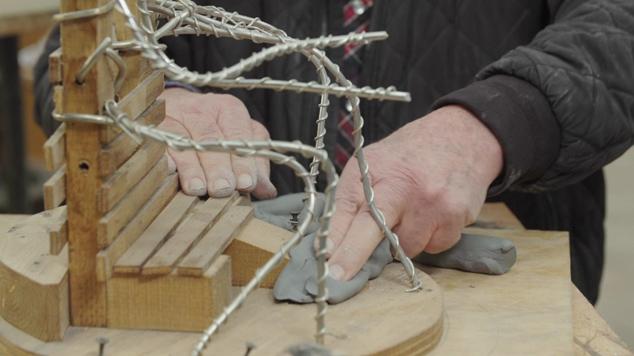
On an accompanying screen, visitors can observe elements of the clay-modeling process from start to finish. Skylight’s Robert Shure layered strips of clay upon a wooden and wire armature; sitting beside the monitor, on a swivel-top modeling table, visitors can see a full clay version of Old Arrow Maker with its back removed to reveal the model’s interior structure.
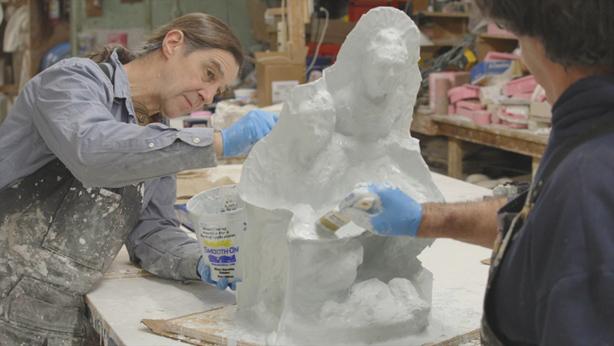
Next, Lewis (likely with the help of assistants) created a mold of the clay model and cast it in plaster. In our case, Skylight used the 3D-print to make a cast. Visitors to the exhibition encounter a full-scale plaster on a worktable, with the two halves of the mold broken open and laying beside it. On screen, visitors can watch Skylight’s team as they painstakingly follow nineteenth-century methods of plaster casting.
Finally, using the plaster cast as template, Lewis (or the master carvers she would have later employed) transferred the measurements from the plaster onto the stone block using a pointing tool and a range of carving techniques. This process would have allowed Lewis to replicate her compositions in marble whenever she received an order from a patron.
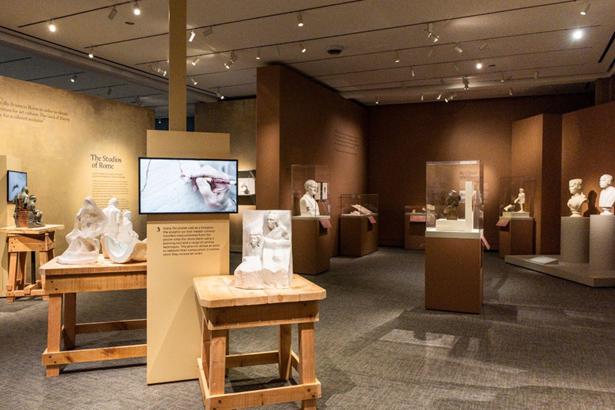
Rather than produce an entirely new marble replica of Old Arrow Maker, however, Skylight’s stone carver shows the composition as if emerging from the marble block. With the actual stone in front of them, as well as footage of the carving process on an accompanying screen, visitors can imagine the slow, methodical process of transferring the plaster into marble.
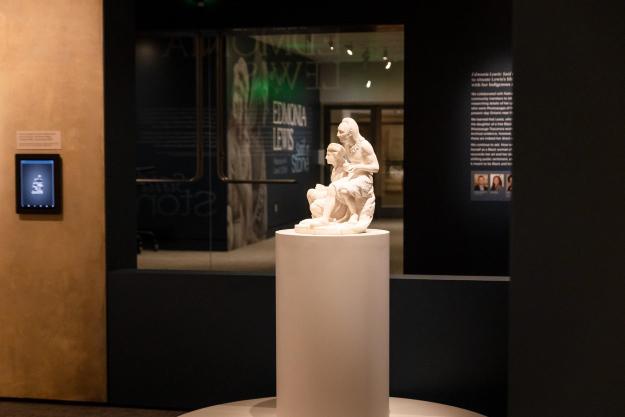
In another corner of the gallery, as if presiding over the entire creative process, sits one of Lewis’s versions of Old Arrow Maker, on loan from the collection of Crystal Bridges Museum of American Art. To the left is a touchscreen featuring the Smithsonian’s 3D scan. By observing the physical version and manipulating the virtual one, visitors can begin to understand the similarities and differences across these works. What details are the same? Which ones differ? Does one sculpture look more polished? Visitors might notice, for example, the variations in ornament and carving techniques in the patterning of the moccasins on the feet of Minnehaha (the female figure kneeling at right), some of them quite simple and others featuring highly elaborate, organic decoration. Visitors can also consider how Lewis intentionally left tooth and chisel marks visible on some surfaces, such as the ground below the figures, while working to smooth out tool marks elsewhere.
The notable variety of sculptural details, execution, and surface finish raise questions about what constitutes a completed, finished work ready for shipment from Lewis’s studio. Does the lack of finish in one version of Old Arrow Maker suggest that she occasionally had to rush a marble out the door of the studio for a ready buyer? Are the versions with more elaborate carving those that she made for patrons who ordered her work from afar, as in the case of actress and arts patron Charlotte Cushman, who encouraged the YMCA of Boston to purchase Lewis’s Old Arrow Maker in May 1867? Or Mrs. Mary Pell of Flushing, Long Island, who ordered a copy of Hiawatha’s Marriage “while it was yet in clay” in 1866?
Through the Smithsonian’s 3D scans, Said in Stone could breathe life into Lewis’s studio space and enliven her sculpting process. Visitors not only gain a more intimate appreciation of her craft as an artist, but also come to understand her savvy, enterprising efforts as she sought to advance her artistic career on a global stage.
Jeffery Richmond-Moll is the George Putnam Curator of American Art at the Peabody Essex Museum and co-curator of Edmonia Lewis: Said in Stone. After closing at the Peabody Essex Museum on June 7, 2026, the exhibition will open at the Georgia Museum of Art on August 8, 2026.
Learn more about the Smithsonian's Office of Digitization.